CVD vs HPHT Lab-Grown Diamonds: What's the Difference?
As lab-grown diamonds continue to grow in popularity, buyers are becoming more interested in understanding how these remarkable gemstones are created. During your research, you've probably encountered two technical terms: CVD (Chemical Vapour Deposition) and HPHT (High Pressure High Temperature).
At first glance, these names can seem confusing and may even make it feel like one type of diamond is better than the other. In reality, both CVD and HPHT are simply different methods of growing genuine diamonds inside a laboratory.
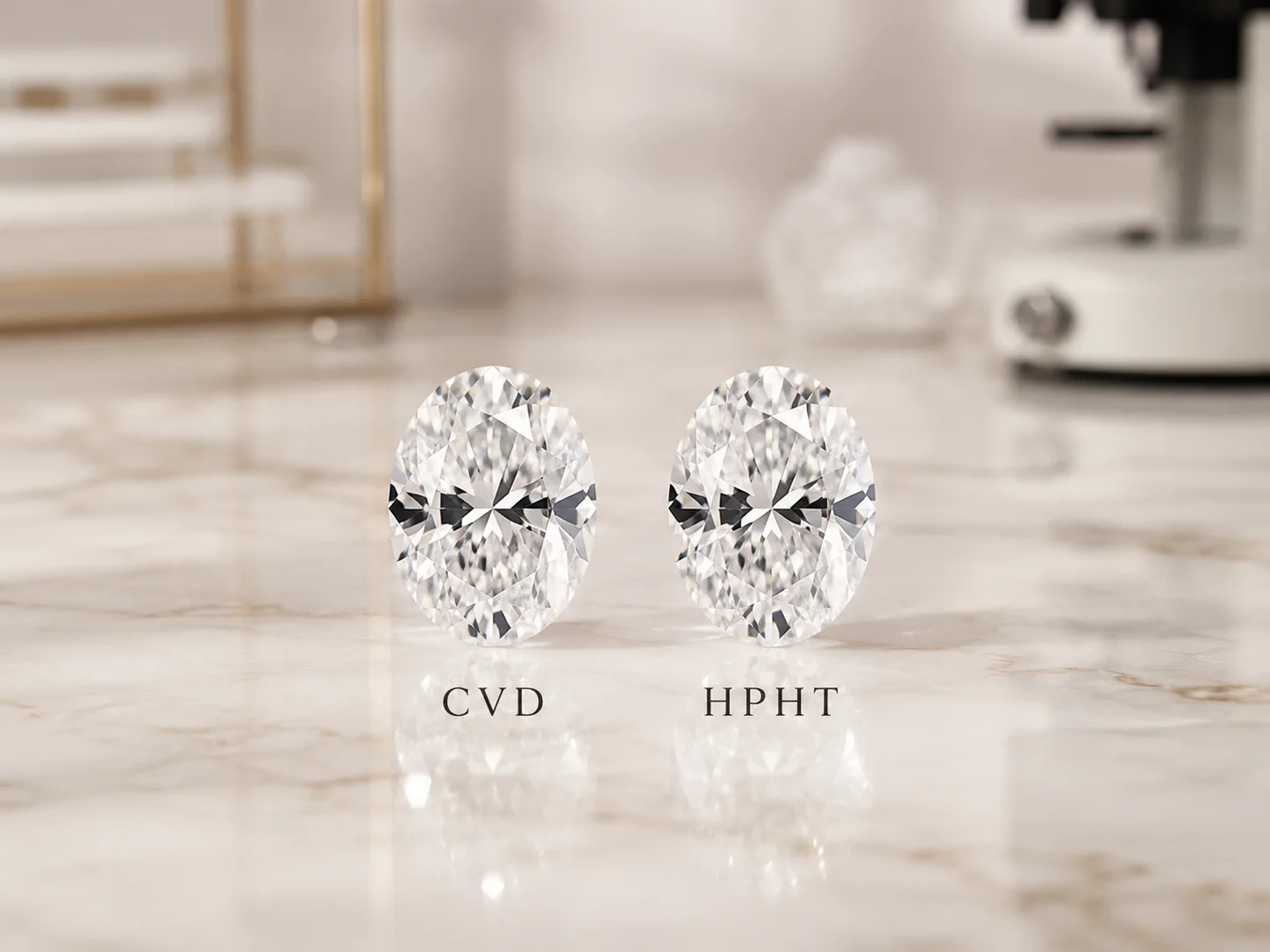
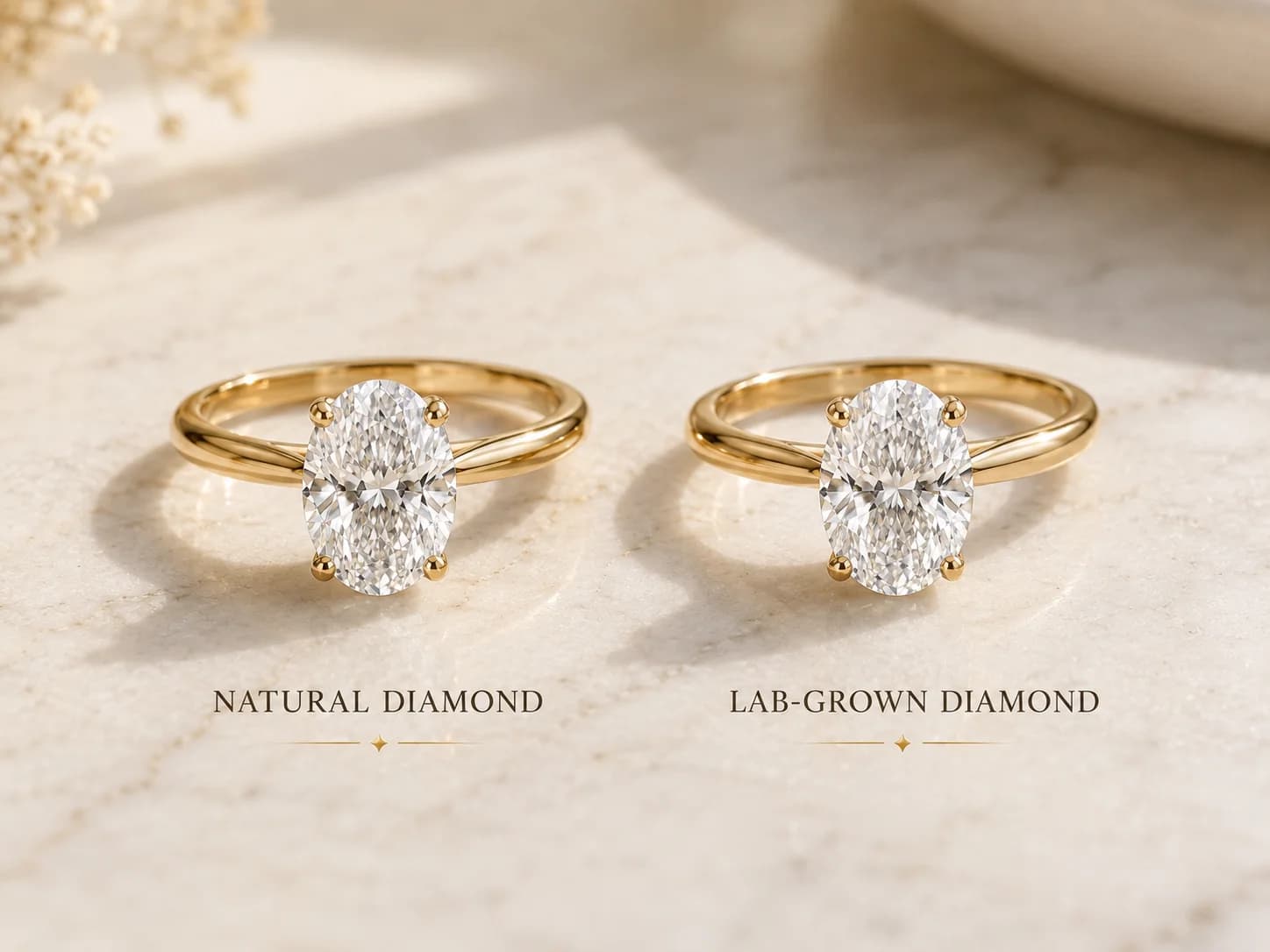
Both produce real diamonds with identical chemical composition, hardness, brilliance, and durability. Once they are cut, polished, and certified, even experienced jewellers cannot distinguish between them with the naked eye.
This guide explains how each process works, the key differences between them, and what you should actually focus on when buying a certified lab-grown diamond.
What Are Lab-Grown Diamonds?
Before comparing CVD and HPHT, it's important to understand what a lab-grown diamond actually is.
A lab-grown diamond is a genuine diamond made from pure carbon atoms arranged in the same crystal structure as a natural diamond. Instead of forming beneath the Earth's surface over billions of years, these diamonds are grown inside highly controlled laboratories using advanced scientific processes.
Because they share the same physical, chemical, and optical properties as natural diamonds, lab-grown diamonds offer the same brilliance, fire, hardness, and durability. They are also graded using the same internationally recognised standards based on the 4Cs—Cut, Colour, Clarity, and Carat Weight.
Whether a diamond is grown using CVD or HPHT, it remains a real diamond.
The method used to grow a diamond does not determine whether it is real. Both CVD and HPHT produce genuine diamonds.
What Is HPHT?
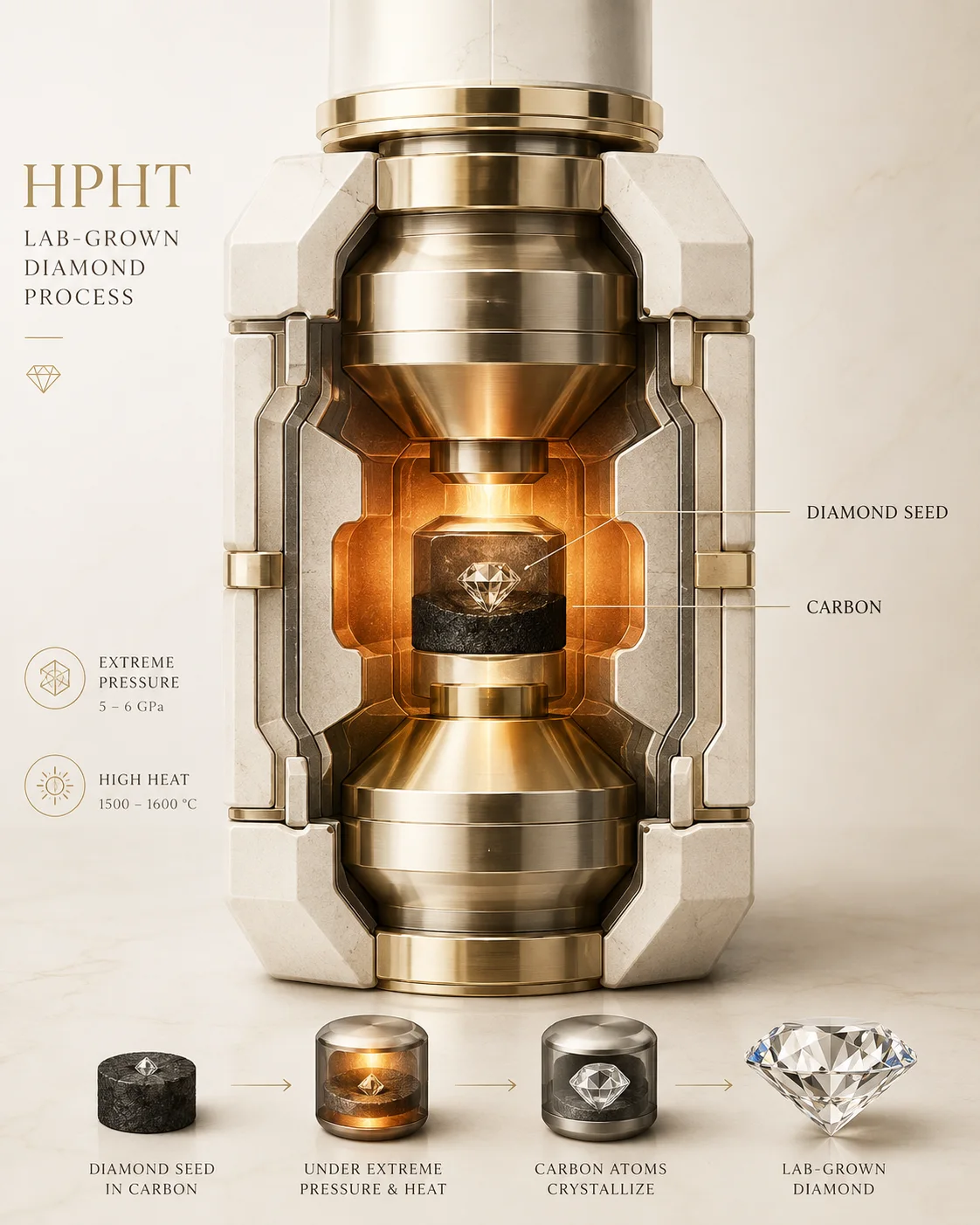
HPHT stands for High Pressure High Temperature, and it is the oldest commercial method used to create lab-grown diamonds.
This process recreates the extreme conditions found deep beneath the Earth's surface, where natural diamonds are formed. Scientists place a tiny diamond seed inside a specialised growth chamber along with pure carbon. The chamber then applies enormous pressure and extremely high temperatures, allowing carbon atoms to crystallise around the seed and gradually form a new diamond.
The HPHT process closely mimics the natural environment in which Earth-grown diamonds develop, making it one of the most trusted methods of diamond production.
How HPHT Works
1. A small diamond seed is placed inside a high-pressure chamber.
2. Pure carbon is introduced around the seed.
3. The chamber generates extreme heat and pressure.
4. Carbon atoms bond to the seed crystal.
5. Over several weeks, a rough diamond is formed.
6. The rough diamond is then cut, polished, and certified.
What Is CVD?
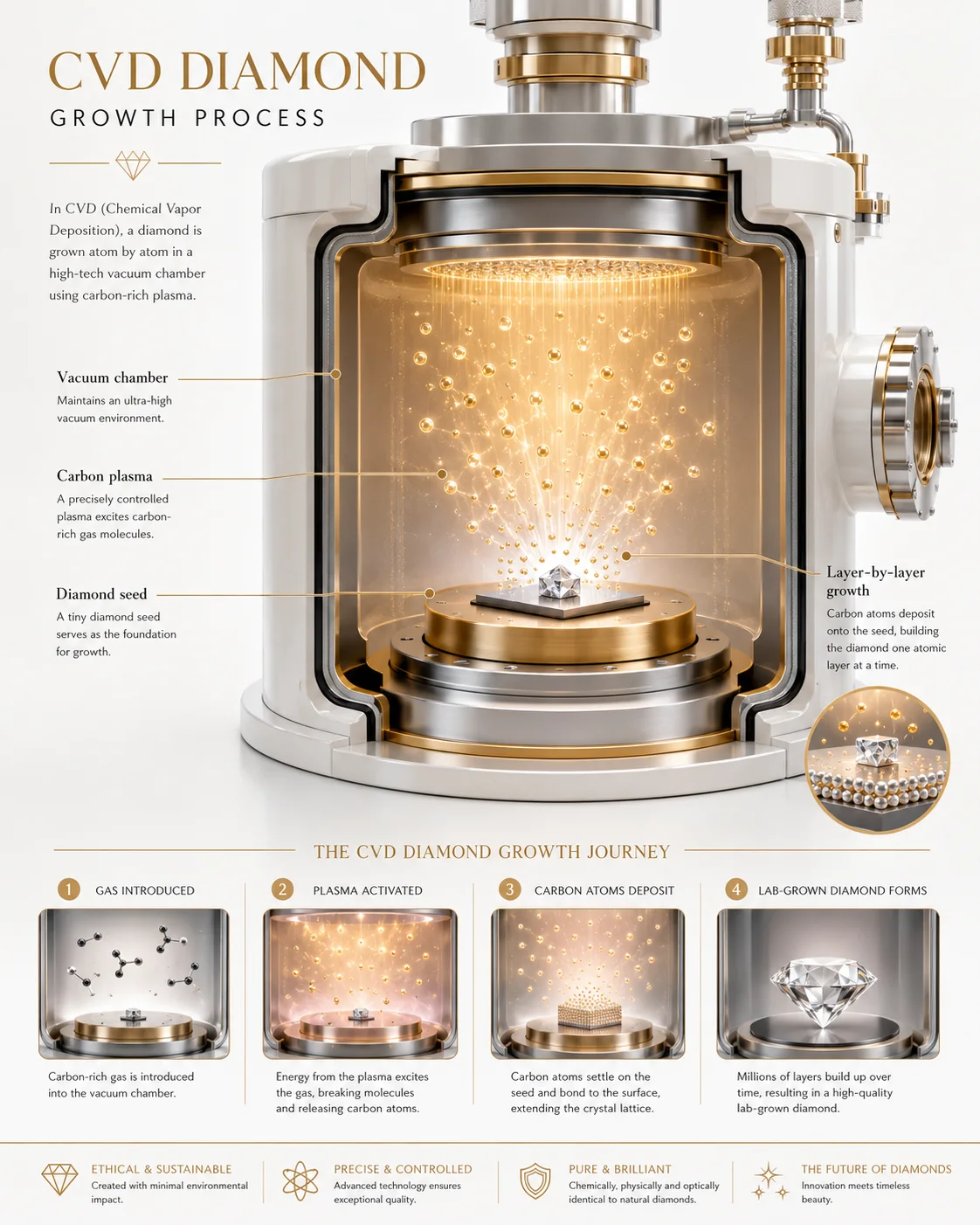
CVD stands for Chemical Vapour Deposition, one of the most advanced and widely used technologies for growing gem-quality lab-grown diamonds today.
Instead of using extreme pressure, CVD grows diamonds inside a specialised vacuum chamber filled with carbon-rich gases. These gases are heated until they become plasma, allowing carbon atoms to slowly attach themselves to a diamond seed one microscopic layer at a time.
This controlled process allows manufacturers to carefully monitor the growth of each diamond, producing exceptional quality and consistency.
Today, many premium jewellery brands use CVD diamonds because of their precision and ability to produce high-quality gemstones.
How CVD Works
1. A thin diamond seed is placed inside a vacuum chamber.
2. Carbon-rich gases are introduced.
3. The gases are converted into plasma using energy.
4. Carbon atoms settle onto the seed.
5. The diamond grows layer by layer.
6. The rough diamond is cut, polished, and independently certified.
CVD vs HPHT: What's the Difference?
Although CVD and HPHT use completely different technologies to grow diamonds, the finished product is remarkably similar. Once a diamond has been cut, polished, and graded, its beauty is determined by its quality rather than the manufacturing process.
For buyers, the differences are usually invisible. The sparkle, brilliance, hardness, and durability remain the same because both diamonds are genuine carbon crystals.
The biggest differences lie in the manufacturing techniques rather than in how the finished diamond performs.
CVD Diamonds
Grown using carbon-rich gas.
Built layer by layer.
Highly controlled manufacturing process.
Widely used for premium jewellery.
Produces excellent gem-quality diamonds.
HPHT Diamonds
Created using extreme pressure and heat.
Mimics Earth's natural diamond formation.
One of the oldest commercial growth methods.
Produces genuine gem-quality diamonds.
Commonly used around the world.
Does One Sparkle More Than the Other?
One of the biggest myths surrounding lab-grown diamonds is that one manufacturing method produces more sparkle than the other.
This simply isn't true.
A diamond's sparkle depends primarily on its cut quality, not whether it was grown using CVD or HPHT.
An Excellent-cut CVD diamond will sparkle beautifully. Likewise, an Excellent-cut HPHT diamond will display the same fire and brilliance.
Rather than asking which process creates a "better" diamond, buyers should focus on choosing the best cut grade possible.
The cut of a diamond influences its sparkle far more than the technology used to grow it.
What Should You Look for Instead?
Instead of concentrating solely on whether a diamond was grown using CVD or HPHT, focus on the factors that genuinely affect beauty and long-term satisfaction.
Choose a diamond with an independent certification, excellent cut quality, eye-clean clarity, attractive colour, and craftsmanship you can trust. These characteristics will have a far greater impact on your experience than the manufacturing process.
Buying from a reputable jeweller who provides complete transparency and certification is far more important than choosing one growth method over another.
Always check:
Independent diamond certification
Excellent cut grade
Colour and clarity
Carat weight
Secure ring setting
Trusted jeweller
Warranty and after-sales support
Final Thoughts
CVD and HPHT are simply two different paths to creating the same remarkable result—a genuine lab-grown diamond. While the science behind each process is fascinating, it shouldn't be the deciding factor in your purchase.
The qualities that truly matter are the diamond's cut, certification, craftsmanship, and how well it matches your personal style and budget.
At House of Diams, we carefully select certified lab-grown diamonds based on their beauty and quality rather than the technology used to grow them. Every diamond is chosen to meet the highest standards so you can shop with complete confidence.
Whether you choose a CVD or HPHT diamond, you're investing in a timeless piece of jewellery designed to celebrate life's most meaningful moments.
The best diamond isn't defined by how it was grown—it's defined by the joy it brings every time you wear it.